
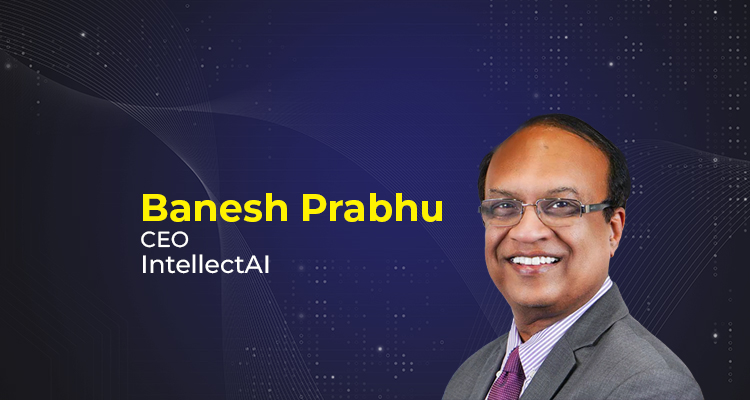
A lot of the conversations around AI in wealth management have focused on chatbots, robo-advisors and automated recommendations. How is an AI-native, agentic approach fundamentally different from these earlier applications, and how is IntellectAI applying it to wealth management?
The first generation of AI largely automated individual tasks. A chatbot answered a question, a robo-advisor proposed an allocation, or an algorithm generated a recommendation. These applications improved specific interactions, but they generally operated as standalone tools at the edges of the wealth management process.
Agentic AI goes further. It can understand an objective, bring together information from multiple systems, reason across that context, coordinate the next steps and involve the right person when judgement or approval is required. AI therefore becomes embedded within the flow of work and at the point of decision.
At IntellectAI, we distinguish between AI augmentation and AI delegation. Augmentation strengthens human capacity by preparing insights, identifying exceptions and supporting better decisions. Delegation allows AI to execute defined activities within clear institutional boundaries. Our approach to wealth management combines both carefully, with the level of autonomy determined by the risk and consequence of each activity.
The objective is not autonomous advice. It is to help institutions and advisors act with greater intelligence, consistency and speed while retaining human accountability.
Wealth management involves bringing together client profiles, portfolio data, market intelligence and institutional knowledge before making decisions. Where can agentic AI create the most meaningful impact in this information-assembly process?
Wealth institutions do not suffer from a shortage of data. Their challenge is that the data is fragmented across client records, portfolio systems, transaction histories, research, market feeds, policy documents and previous interactions. Before an advisor can make a decision, considerable effort is often required simply to establish the complete context.
Agentic AI can significantly compress this journey from information to action. It can help assemble the relevant client and portfolio context, identify material changes, separate signals from noise and explain why something requires attention.
For example, rather than presenting an advisor with an isolated portfolio alert, an agentic workflow could connect a change in allocation with the client’s goals, liquidity requirements, risk profile and applicable suitability considerations. It could then prepare possible actions for the advisor to evaluate.
The real opportunity is not faster search or better summarisation. It is creating decision-ready intelligence at the moment it is needed. This allows the advisor to spend less time assembling information and more time interpreting it in the context of the client.
As AI agents become capable of detecting portfolio exceptions, coordinating workflows and recommending next steps, what safeguards does Intellect put in place to ensure that AI supports, not replaces, advisor judgement and institutional controls?
The most important question is not simply what an AI agent can do. It is what the agent is authorised to do, under which circumstances and with whose approval.
At IntellectAI, we believe AI must operate within the institution’s established policies, permissions and control structures. This includes role-based access, data entitlements, suitability rules, approval thresholds, auditability and clear escalation paths. The degree of autonomy should always correspond to the risk and materiality of the activity.
An agent may be permitted to assemble information, identify an exception or prepare a recommendation. However, decisions that materially affect a client’s portfolio, financial plan or interests must remain subject to the appropriate human review and institutional governance.
Explainability is equally important. An advisor must be able to understand why an issue was identified, what information influenced the proposed action and which policies or assumptions were considered. The institution must also be able to reconstruct that process for risk, compliance and audit purposes.
This is governed augmentation: AI expands analytical and execution capacity, while accountability and consequential judgement remain firmly human.
The wealth advisor remains the primary relationship and trust anchor for clients. As AI takes on more operational and analytical work, how do you see the advisor’s role evolving, and what should remain firmly under human control?
The advisor will become more important, but the nature of the role will evolve.
Today, advisors spend significant time gathering information, preparing reviews, documenting interactions and coordinating activities across the institution. As AI takes on more of this operational and analytical work, advisors can devote greater attention to understanding clients, interpreting choices and guiding them through complex decisions.
The advisor of the future will be less of an information intermediary and more of a judgement partner. AI may identify a risk, simulate scenarios or propose possible actions. But it cannot independently understand how a client or family thinks about security, ambition, uncertainty or legacy. Nor can it own the trust developed through years of human interaction.
Empathy, ethical responsibility, contextual judgement and the final interpretation of what is right for the client must remain under human control. AI should make every advisor more informed, proactive and available. Over time, this can also help institutions extend high-quality, personalised guidance to a much broader population without compromising the human relationship at its centre.
What is the bigger opportunity: automating individual tasks or fundamentally redesigning the operating model around AI-native, agentic workflows? What will the wealth management institution of the future look like?
Task automation can create immediate efficiencies, but it is not the destination. If AI is added to fragmented processes without rethinking them, institutions risk automating the fragmentation.
The bigger opportunity is to redesign the operating model around intelligent, end-to-end workflows. AI should not sit as a collection of disconnected tools across advisory, portfolio management, compliance, servicing and operations. It should help connect these functions, carry context across them and bring people into the process at the appropriate decision points.
The AI-native wealth institution will be continuously intelligent rather than periodically reactive. Advisors will begin with prioritised and explainable actions instead of disconnected alerts. Operating teams will focus on exceptions rather than manually transferring work between systems. Institutional knowledge will increasingly be embedded within workflows rather than remaining dependent on individual memory.
This transformation does not require firms to discard their existing technology estates. The future will be composable, allowing AI-native capabilities to coexist and integrate with established core, portfolio, CRM and market infrastructure. The institutions that lead will be those that combine human trust, institutional knowledge and governed AI execution to improve productivity, widen access to advice and deliver better client outcomes.
Enjoyed this interview? Now imagine yours. Write to:
editor@thefoundermedia.com