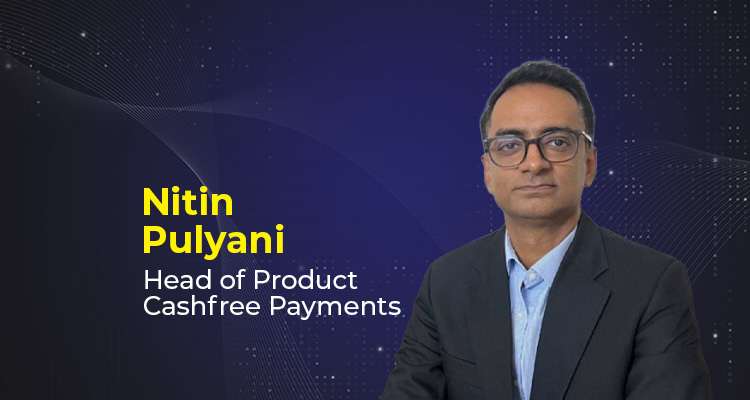

With banks dominating UPI, what opportunities do NBFCs have to differentiate through AI-driven financial services?
Banks, by their nature, will always have the first-mover advantage with UPI because it is, fundamentally, a bank-to-bank transfer system. However, this is also where the opportunity lies for us as NBFCs. Our differentiation isn’t just about facilitating payments; it’s about what we do with the vast transaction data that UPI generates.
Also, NBFCs cannot compete with banks purely on transaction volumes. The opportunity lies in personalised, AI-driven financial services:
- Alternative Data: Using device signals, UPI intent data, and behavioral analytics to underwrite thin-file customers.
- Contextual Micro-Loans: Embedding instant credit at checkout, bill payments, and merchant apps.
- Dynamic Pricing & Nudges: Offering flexible EMI, savings-linked loans, and bundled insurance products.
- Customer Experience: Faster underwriting and omni-channel service delivery.
This way, NBFCs transform UPI payments data into customer engagement funnels rather than chasing volumes.
Do you believe UPI 3.0 will transform NBFCs from lending-first institutions to payment-enabled credit ecosystems?
Absolutely. UPI 3.0 is a paradigm shift. The ability to offer credit lines on UPI is a revolutionary step. For years, UPI has been a debit network, moving money users already have. With UPI 3.0, it becomes a credit network. This fundamentally blurs the line between lending and payments.
This is a massive opportunity for NBFCs. Instead of being “lending-first” institutions that onboard customers for a single product, we can now become payment-enabled credit ecosystems. We can offer pre-approved credit right at the point of a UPI transaction. A user can buy something and choose to pay with their credit line, all within the same seamless UPI flow. This will allow us to drive greater customer engagement and loyalty, as we’re no longer just a lender but a daily financial partner. It moves us from a reactive “apply-and-wait” model to a proactive, instant-credit-in-hand model.
This means credit becomes a seamless, integrated part of a consumer’s daily life. Instead of applying for a separate loan, a customer can instantly use their approved credit line to make a UPI payment for a purchase. This shift turns every UPI transaction into a potential point of credit disbursal. NBFCs can use AI to analyse real-time UPI transaction data and offer dynamic credit limits, personalised interest rates, and automated repayment schedules. This creates a powerful credit-on-demand model, fostering a continuous and deeply integrated relationship with the customer, well beyond a one-time loan.
How are you ensuring fairness in AI-driven lending decisions and avoiding algorithmic bias against new-to-credit borrowers?
Ensuring fairness is our ethical and business imperative. We approach this from two key angles: data and model governance. First, we are committed to using a diverse set of alternative data sources to assess creditworthiness. Traditional credit scores often disadvantage new-to-credit borrowers because they simply lack a formal credit history. Our AI models are trained on a broader spectrum of data, including utility payments, mobile phone usage, and digital transaction history, which provides a more holistic and accurate view of a borrower’s financial behavior.
Second, we employ a robust Explainable AI (XAI) framework. We do not use “black box” models. Every lending decision has a transparent audit trail, allowing us to understand why a loan was approved or rejected. This helps us to actively monitor for and mitigate any potential biases that may creep into the algorithm. We conduct regular audits and back-testing of our models to ensure they are consistently fair and non-discriminatory. Our goal is to expand financial inclusion, and that starts with an ethical and transparent lending process.
AI must expand access, not exclude it. Our safeguards include:
- Fairness Constraints: Monitoring models for disparate impact and bias.
- Explainable AI: Giving customers clear reasons for approval or rejection.
- Alternative Data: Utility bills, transaction histories, and device patterns to support new-to-credit borrowers.
- Human Oversight: Manual review for edge cases.
- Regulatory Alignment: Strict adherence to the Digital Personal Data Protection Act (DPDP) on consent, minimal data usage, and auditability.
These measures build both fairness and trust.
With loan frauds rising, how are NBFCs using AI to detect synthetic identities and fraudulent UPI-linked applications?
Loan fraud is a significant and evolving challenge. The rise of synthetic identities—where fraudsters combine real and fake information to create a new identity—is particularly concerning. We’re combatting this with a multi-layered AI approach.
Fraudsters are using advanced techniques, including synthetic IDs and deepfakes. AI-based detection relies on:
- Device & Behavioral Fingerprints: Spotting anomalies in keystrokes, geolocation, or transaction velocity.
- Graph Analytics: Mapping hidden connections between suspicious accounts.
- Real-Time Anomaly Detection: Blocking transactions with unusual repayment or UPI linking patterns.
- Adaptive Models: Continuously retraining fraud-detection systems as patterns evolve.
This layered approach balances fraud control with smooth customer onboarding.
How is your organisation ensuring compliance with the Digital Personal Data Protection Act (DPDP) when integrating AI?
Compliance with the DPDP Act is paramount. The very foundation of our AI integration is built on the principles of consent and data minimisation. We have implemented a consent management framework that is granular, specific, and easily revocable.
Users are given clear, plain-language notices explaining what data we are collecting, why we are collecting it, and how it will be used by our AI models.
We are ensuring compliance by:
- Purpose Limitation and Data Minimisation: We only collect and process personal data for a specific, lawful purpose for which we have obtained explicit consent. Our AI models are designed to use the minimum amount of data required to make a decision, a principle known as “data minimisation.” We do not retain data for longer than is necessary.
- Explicit and Unambiguous Consent: Before processing any personal data for an AI application, we provide clear and concise notice to the data principal (the user). This notice explains exactly what data we are collecting, why we need it, and how it will be used. Consent is obtained through a clear, affirmative action and can be easily withdrawn by the user.
We see DPDP not as a hurdle, but as a framework to build long-term digital trust.
Do you believe cross-border UPI + AI-powered microfinance can open new markets for NBFCs?
Yes, this is a major frontier. Cross-border UPI linkages, such as those with Singapore’s PayNow, are just the beginning. The real revolution will be when we combine this with AI-powered microfinance. This can open up huge new markets for us, particularly in remittance corridors.
Imagine a migrant worker who sends money back home. Our AI can analyze their transactional behavior in India, their savings patterns, and their remittances via UPI. Based on this data, we can offer micro-credit to their family back in their home country, with repayments structured to align with the remittance schedule.
This transforms a simple payment transaction into a financial service. It allows NBFCs to provide a financial lifeline to the unbanked and underbanked populations in neighboring countries, all powered by the robust infrastructure of UPI and the intelligence of AI. It’s a powerful combination that turns payments into a gateway for financial inclusion on a global scale.
Enjoyed this interview? Now imagine yours. Write to:
editor@thefoundermedia.com