
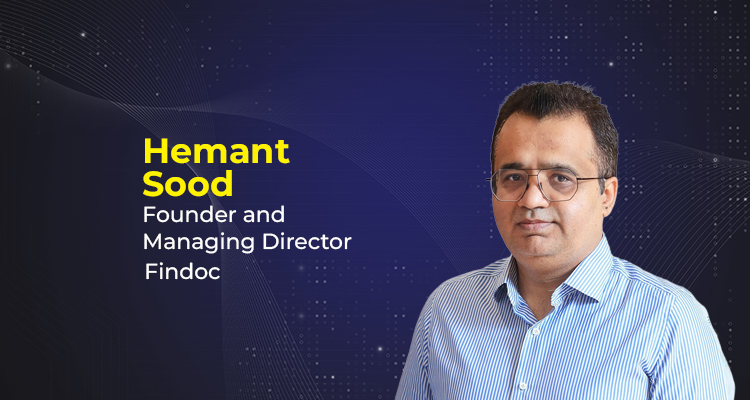
How would you describe the current state of India’s financial markets, and what major trends do you expect to shape the investment landscape over the next few years?
Indian markets are recovering, but not calmly. Foreign portfolio investors pulled about ₹2.95 lakh crore out of Indian equities between January and October, then bought more than ₹1 lakh crore in November, the highest monthly inflow on record, according to NSDL data. Brent crude has fallen from about $113 a barrel at the end of October to below $100, and the rupee has recovered from its record low near 97 to the dollar. Households kept investing through it: ₹32,160 crore went into mutual fund SIPs in October, according to AMFI, and equity funds recorded their 68th consecutive month of net inflows.
Three things are likely to shape the next few years. The first is the cost of money. The RBI raised the repo rate to 5.50% in October, its first increase since February 2023. The second is oil, which still drives much of India’s inflation and currency risk. The third is supply. More businesses are likely to raise capital on the strength of domestic demand, many with limited track records, so I would watch what promoters do with the money. Two businesses can report identical earnings growth while earning very different returns on each additional rupee that shareholders put in.
What are the biggest challenges retail investors face today when navigating volatile markets, and how can they make more informed investment decisions?
On 23 November the Nifty fell 1.75%, its sharpest one-day fall in about four months, in the middle of a record month of foreign buying. One costly mistake is to buy a share for the long term with money the family needs in six months, because the investor may have to sell on the worst day. An options buyer faces an even tighter deadline because the contract expires. SEBI found that 87.7% of the individual equity derivatives traders in its FY26 study lost money after costs. Those who lost money lost ₹1.47 lakh on average.
Before buying, I would write down three things: when I need the money, what the business must deliver to justify today’s price, and what evidence would change my mind. Then I would put the risk in rupees. A 30% fall in a share that makes up a fifth of a ₹10 lakh portfolio costs ₹60,000. If that loss would force a sale, the position is already too large.
How are technology, data analytics and AI changing investment research, portfolio management and decision-making in the financial services industry?
At Findoc, we use AI to prepare the first reading of a company’s quarterly results and reconcile the figures. Work that took days now gives an analyst a starting point in hours. If profit has risen while operating cash flow has weakened, the analyst checks the filings to see whether a customer is taking longer to pay or the company is building inventory for a confirmed order. The same numbers can lead to very different conclusions.
In portfolio management, analytics can reveal a common risk across unrelated-looking holdings. A bank, a property developer and a building materials supplier may all depend on affordable housing credit. In trading, suppose a model correctly predicts a 0.2% price move. If the spread and the cost of entering and exiting the position add up to 0.3%, that correct call still loses money. I want to see that calculation before putting capital behind a model.
What opportunities do you see emerging in India’s financial markets across sectors such as manufacturing, infrastructure, financial services and technology?
I would start with power transmission and electronics manufacturing. The Centre spent about ₹6.5 lakh crore on capital expenditure in the first half of FY27, a little over half of the full-year budget, according to the Controller General of Accounts. A grid upgrade can create orders for both a transformer maker and a contractor, but their economics differ. The manufacturer needs to keep its plant busy after the first orders are delivered. The contractor may have to pay for labour and materials months before the utility pays its bill, and with interest rates rising that gap costs more to fund. I would read the cash flow statement alongside the order book.
Electronics exports rose 44% year on year to US$31.97 billion in April to September 2026, according to the Commerce Ministry. For a component supplier, I would ask how much of the product it makes locally and how dependent it is on one buyer. In financial services, as rates rise, lenders with stable deposits and a clear view of those suppliers’ payment cycles can still find sound borrowers. In technology, I see scope for software that cuts factory downtime. A customer renewing a contract after measuring the savings carries more weight with me than a pilot announcement.
What is Findoc’s growth strategy for the coming years, and what key developments, expansion plans or new offerings can investors and industry stakeholders expect?
Our aim is to democratise the tools of investing. An investor in Ludhiana or any small town should have access to the same quality of tools, research and guidance as a client of a large institution. We are building that into our app and website, along with a knowledge bank that explains products and risks in plain language. Our new app, Sparkk by Findoc, is expected to launch in the next couple of months. What I want it to carry from our trading desk to a client’s screen is the habit of asking what can go wrong before placing an order. Alongside this, our Portfolio Management Services serve clients who want a professionally managed, long-term portfolio and not only a trading account. Our GIFT City entity opens a route for investors to invest in foreign markets, so that a portfolio does not have to depend on one country. For foreign portfolio investors coming into India, we are strengthening research and execution. In each of these businesses the test stays the same: protecting client capital comes before growth.