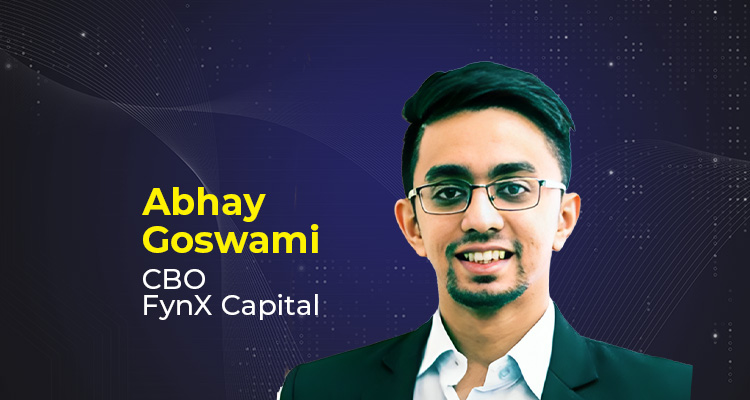
What are the eligibility criteria for MSMEs to avail FynX Capital’s loans and how do you accommodate businesses that don’t meet traditional bank lending criteria?
The eligibility criteria for MSMEs is mostly standard across lenders in today’s time, given access to valuable data points being readily available such as Bureau Scores (to understand repayment track), GSTR data (to understand sales, circular transactions and concentration risk), banking (to understand repayment ability and cash flow patterns), etc. However, at FynX Capital, we tend to focus more on understanding each borrower’s business, its growth opportunities and bring in empathy to the process, to avoid making lending decisions based on traditional or standardised banking criteria.
Our core focus is in line with the Indian Government’s push for the Indian manufacturing ecosystem, while also catering to participants directly involved in the supply chain ecosystem of these Indian manufacturers, be it suppliers, super stockists, or distributors.
What is FynX’s approach to non-performing asset management in the MSME loan segment? What are historical default rates?
At FynX Capital, we address overdue accounts before coming to NPAs. Overdue accounts, especially in the Unsecured lending space also need to be managed empathetically. MSMEs are typically not business owners who can afford to intentionally default, as such businesses are run by middle class families, whose survival depends on the particular business. We understand that MSMEs might face sudden cash crunches due to external factors. Being in a tech enabled environment allows us to pre-empt business slowdowns and accordingly manage our communications with our borrowers.
The streamlined Insolvency Resolution Guidelines and the Prudential Framework for Resolution of Stressed Assets, along with Early Warning System triggers backed by tech, allows us to actively monitor borrower behaviours and their businesses. I believe that India’s overall MSME NPAs have come down significantly from 11% in FY20 to 3.59% in FY25, however lenders need to actively pre-empt future NPA possibilities across products. For FynX Capital, we’ve built-in risk models to actively account for future NPAs across all of our retail and MSME lending products, but a time span of 3-5 years will show us what modifications might be required to keep improving the efficacy of these models.
How does FynX Capital manage data privacy, and comply with any data protection regulations in India, especially with emerging DPDP norms?
Data privacy and DPDP norms are one of the key pillars of the financial lending ecosystem that FynX Capital adheres to, by obtaining informed consent from borrowers from the very start, having efficient data security measures, having multi-layer access rights on our platform, so as to ensure data access to respective departments, only limited up to their respective job roles, while also following data minimisation, in order to collect data only as per minimum requirements for credit risk or operational purposes. Since our LOS and LMS systems powered by BillMart are completely digital, we’re able to manage the Data Protection aspect in a far more seamless manner.
What is your strategy to reach smaller MSMEs in Tier-2 or Tier-3 cities and what challenges do you face there?
Accessibility to borrowers can sometimes be a challenge in Tier-2 and Tier-3 locations, however, we’ve created lending models wherein we have strong presence on the ground through our BC partners or direct access through the Anchor Sales representatives under Channel Finance programs. We’re trying to address the gaps in existing channel finance programs and the reluctance of traditional lenders to offer such limits in Tier-2 / Tier-3 locations. Other challenges in such locations include digital data sharing or process understanding. We’re grateful to have strong partners and SCF Anchors, who help us disseminate the process knowledge across the Tier-2 and Tier-3 locations.
FynX Capital states that they ‘look beyond collateral’ by evaluating things like income stability, repayment history etc. Which of these non-collateral metrics have shown strongest predictive power for default?
At FynX Capital, we look at every metric for its unique ability to display a particular behaviour. We’ve noticed consistent low bank balances of MSMEs and avoided the risk of defaults, or over-dependence on an inconsistently paying buyer leading to cash flow mismatches. These data points are typically drawn from GSTR and Bank Statement analyses, however, have shown to give consistently strong predictive results, as these factors have long stood true towards showing cash flow stability of a borrower, while considering lending decisions beyond the typical collateral security.
In certain retail lending products of ours, data points such as number of hours worked historically, on a monthly basis, helps us identify eligibility of a gig worker or an off-payroll employee.
How large is the addressable market in MSME finance for FynX Capital, and what share do you aim to capture in, say, 3-5 years?
MSME financing market size of India is close to Rs. 35 – 40 lakh crores as per most reports, while the total market demand of debt amongst MSMEs is more than 2X the same. While the MSME financing addressable gap is identified to be around Rs. 50 lakh crores, that leaves a clear unaddressed gap of 25% or higher.
With the recent management change, business model shift and a new core team in place, if FynX Capital aims to capture 0.05% of the addressable market, we’d have catered to a significant portion of the MSME financing market in India. Over the coming months and years, our goal shall be to remain agile and adaptable to the market conditions and our offerings to this MSME ecosystem, with a clear focus on the Government’s push for ‘Make in India’ and our offerings geared towards these MSMEs, especially manufacturers and their related supply chains, while having alternative retail products like the one that we currently have, to cater to the inaccessible gig worker economy of India.
Enjoyed this interview? Now imagine yours. Write to:
editor@thefoundermedia.com