
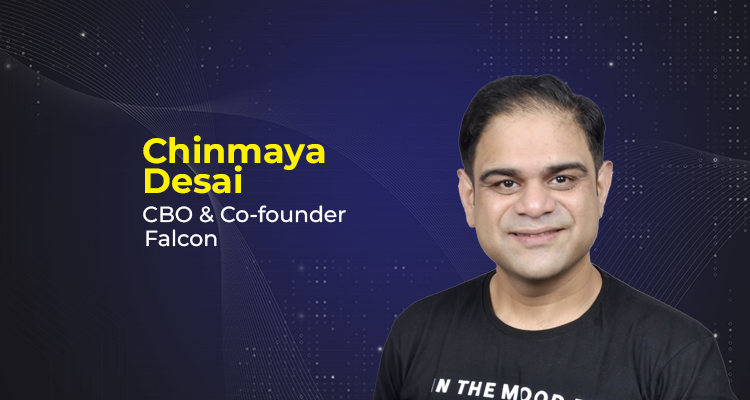
How is Falcon helping banks and fintechs move beyond legacy infrastructure to launch credit, UPI and card products faster and at scale?
Most banks know their card and lending systems need to change. On a legacy core, change is slow and expensive. A new product can take 12 to 18 months to launch, a single programme often depends on five to eight vendors, and even a small change to fees or limits joins a queue that takes quarters to clear.
Falcon gives banks one cloud-native, AI-first core for credit cards, credit lines on UPI, loans, prepaid and UPI, and builds and runs every layer itself, from its own switch to the apps customers use. That changes four things. Speed: new card programmes go live in 12 to 16 weeks, with white-labelled, fintech-grade apps from day one and no code written by the bank. Efficiency: pay-as-you-go economics replace heavy upfront technology costs, and total system costs come down by 60 to 80 percent compared with a legacy multi-vendor stack. Trust: AML, KYC and RBI-ready compliance are built in from day one. Growth: banks gain access to Falcon’s partner network and co-brand opportunities.
Falcon also takes on the operational heavy lifting, from BIN certifications and settlements to disputes, compliance reporting and 24/7 production support. When a bank is ready to move its existing book, the path is proven. Falcon is one of the first technology service providers in India to migrate a universal bank’s live card portfolio from a legacy core to a modern one, in production.
What role is AI playing in improving credit underwriting, fraud detection and portfolio management, and where do you see its biggest potential evolving?
I see AI in banking moving through three phases: assistive, advisory and autonomous. Banks already have the data. In most of them, every new cut of portfolio data still means a request to the data team and a wait of days, and by then the moment to act has passed.
AI changes that across the credit lifecycle. In underwriting, credit can be decided on UPI transaction history and behaviour alongside bureau scores. In risk, early-warning models can flag a customer heading towards delinquency and prioritise collections before the account slips. In portfolio management, cohort models can show which customers to activate, which are likely to spend more and which need support early. India’s largest issuers built this discipline over 15 to 20 years of investment. AI inside the core puts it within reach of every bank.
Today, the biggest opportunity sits inside the bank’s own operations. Reconciliation, disputes, collections, servicing and portfolio campaigns still depend on manual effort at most banks, and each is a place where AI can act on live transaction data within minutes. That is why we built MerlinFX as seven specialist agents inside the core, acting on the bank’s sign-off. SurgeFX, our portfolio growth agent, is already live with universal and small finance banks.
As digital financial products become more personalised, how can technology help institutions expand access to credit while maintaining responsible risk management?
In credit, personalisation should start with the product itself: the right limit, the right structure and the right entry point for each customer.
Credit cards remain the anchor of a bank’s retail credit business. Around them, banks now have more ways to bring new customers into formal credit. A small credit line on UPI reaches people where they already pay every day. An FD-backed secured card gives a first-time borrower a safe start. A credit line linked to a savings account turns an existing deposit relationship into a credit relationship. Falcon runs all of these alongside credit cards on one core, and its credit engine supports dozens of constructs, from zero-interest sachet credit to EMI and purpose-linked lines, each one a configuration the bank can design and launch itself.
Responsible risk comes from how these products work together. On Falcon, NPAs on standard small-ticket credit on UPI stay under 2 per cent, and because customers discover the product inside the UPI apps they already use, acquisition costs stay low. Banks can start customers on a small line, see how they use and repay it, and grow those who manage credit well into secured and unsecured cards on the same platform. Underwriting, the ledger and collections sit on one system across every product, so the bank sees each customer’s full picture and can act on early warning signs.
Falcon has scaled its platform across major financial institutions. What have been the key lessons in building infrastructure that can deliver both scalability and reliability?
Scale and reliability have to be built together from day one. Every new customer, product and peak day adds load to a bank’s core, and regulatory expectations on IT resilience have never been higher. A modern, resilient core gives banks the confidence to grow their card and credit businesses at full speed.
Running card programmes for more than 15 institutions has taught us three lessons. Build for peak days: our platform scales automatically for festive and campaign spikes, with failover across zones and disaster recovery across regions. Keep the critical path in your own hands: Falcon owns its full stack, so there is no third party between the customer’s payment and the core. And keep improving without disruption: we ship regular platform updates with zero downtime.
Security and compliance sit underneath all of it, with PCI DSS, PCI 3DS, ISO 27001 and SOC 2 Type II certification, round-the-clock monitoring and payment data stored in India. Today Falcon serves more than 15 financial institutions and 15 million cards and accounts, has processed over $2 billion, runs at 99.99 per cent uptime, handles 5,000+ transactions a second, and has a 100 per cent client retention rate.
Looking ahead, what changes do you expect in India’s digital financial infrastructure, and how is Falcon preparing to support the next phase of fintech innovation?
Three changes stand out. First, operations will become one of the constraints on growth. With UPI handling more than 24,000 crore transactions a year and credit cards growing close to 10 per cent annually, banks cannot keep adding people at the same pace, so AI will take on the daily work of reconciliation, disputes, risk checks and campaigns. Second, AI will move into the core. Systems built for end-of-day processing give AI yesterday’s data, and the next phase will run on the transaction as it happens. Third, governance will shape adoption. Following the RBI FREE-AI committee’s principle that final decisions rest with people, the banks that move fastest will be those whose AI handles reversible work and leaves anything that moves money to a bank officer.
Falcon has prepared for all three. We built our own processing core, so cards, credit lines, loans, prepaid and UPI run on one real-time platform. MerlinFX puts AI agents inside that core, working on the bank’s own data and rules, with a named officer approving anything irreversible and every decision on record. That lets banks grow their business without growing their headcount.
Enjoyed this interview? Now imagine yours. Write to:
jeevika@thefoundermedia.in