
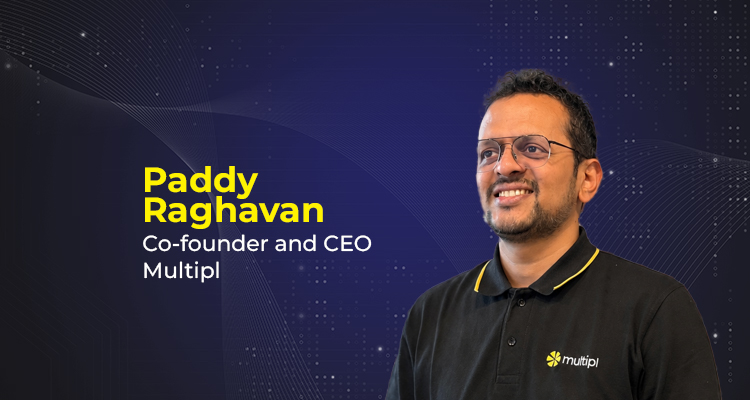
How is the convergence of payments, investments, and everyday spending changing the way Indian consumers manage their money?
For years, Indian consumers have run two parallel financial lives – one where they invest for the long term, and another where they keep money aside for near-term spending, usually parked in a low-yield savings account. That separation made sense when payments and investments sat on entirely different rails. UPI changed the payments side by making money movement instant and universal. What hasn’t kept pace is the asset underneath that payment – it’s still almost always idle bank balance. At Multipl, we think the next shift is bringing investment-grade assets directly into the payment moment itself, so the money in your spending account isn’t just sitting there, it’s working, right up until the second you spend it. That’s the essence of our Spending Account with UPI: your everyday spending money lives in a liquid mutual fund, and when you pay – by UPI or for a bill – it’s redeemed and settled instantly. Payments, investing and spending stop being three separate journeys and become one continuous flow.
Multipl has championed the idea of “spendvesting” and moving away from consumption-led credit. How can FinTech help consumers build healthier financial habits without compromising on convenience and lifestyle?
Spendvesting, to us, is simple: instead of borrowing against tomorrow’s income to fund today’s spending, you invest the money you already have earmarked for spending, and let it earn while it waits. It flips the default from “spend now, pay later” to “invest now, spend when ready.” The reason this hasn’t been mainstream before is that investing and spending have always required different discipline – one rewards patience, the other rewards immediacy. FinTech’s job is to remove that trade-off, not ask consumers to choose. Our Spending Account with UPI is built around AMC partners including UTI Mutual Funds, Axis Mutual Fund, ICICI Prudential, and HDFC Mutual Funds, so a user’s money is diversified across regulated liquid funds while still being one tap away from a UPI payment or a bill settlement. Healthier financial habits shouldn’t feel like a sacrifice, they should feel like the more convenient option, and that’s the bar we hold ourselves to.
With UPI becoming central to everyday payments, what opportunities do you see in making idle spending money work harder while keeping it readily accessible?
UPI solved velocity – money moves instantly. What it didn’t solve is what that money is doing in the moments before it moves, and what it costs the consumer to spend it. Our own user behaviour data shows people routinely set aside funds for bills, subscriptions and everyday spends well before the actual payment date, which means that money is sitting idle in a low-interest account for days or weeks, purely out of habit. That’s the opportunity: let consumers hold that same money in a liquid mutual fund instead, with same-day, on-demand redemption, so nothing about convenience changes but the money itself does more. We’ve taken this a step further with Investment UPI: because the money is invested right up to the point of payment, we’re able to pass a discount back to the user on every spend made through Multipl’s UPI. In other words, UPI today lets you pay instantly; our version of UPI lets you pay instantly and pay less, simply because your money was earning right up until the moment it moved. That’s a meaningfully different value exchange for the consumer compared to a regular UPI payment out of a zero-yield bank balance. Our BBPS integration extends the same logic to bill payments specifically, electricity, mobile, broadband, DTH, gas, water and credit card bills, so the money set aside for these recurring, predictable expenses doesn’t have to be moved into a savings account in advance. It stays invested, and working, until the moment it’s needed.
Trust, security, and regulatory compliance are critical when fintech platforms handle consumers’ money. What are the biggest priorities for building secure and scalable financial products in India?
When you’re touching both payments and investments, you inherit the compliance responsibilities of both worlds, and we treat that as a feature, not friction. Multipl operates as a licensed TPAP (Third Party Application Provider) for UPI under the NPCI framework, and every rupee in the Spending Account sits in SEBI-regulated liquid mutual funds managed by established AMCs; we don’t hold custody of user funds ourselves. That structure is deliberate: it means consumers get the benefit of an integrated experience without us having to ask them to trust a new, unregulated instrument. Our priority as we scale is to keep that architecture intact, partnering with regulated AMCs, banks and payment infrastructure providers like BBPS rather than trying to disintermediate them, and being transparent with users about redemption timelines, charges and how their money moves at every step. In FinTech, scale without that discipline is fragile. We’d rather grow slower and stay trustworthy.
Looking ahead, what will define the next phase of India’s consumer FinTech ecosystem, and how do you see technology changing the relationship between saving, investing, spending, and financial wellness?
I think the next phase is defined by the collapse of artificial boundaries between financial products. Savings, investing, spending and credit have historically been sold as separate accounts and separate apps, largely because the infrastructure forced that separation. That infrastructure, UPI, BBPS, AMC digital rails, now exists to unify them, and consumer expectations are catching up fast. For Multipl, that means categories like “Investment UPI” won’t stay niche; they’ll become a natural evolution of how people hold and use money day to day. We’re targeting significant scale-up over the next 6-12 months, both in the core Spending Account and in BBPS-enabled bill payments, because we believe the underlying idea, that money set aside for near-term use shouldn’t have to be idle, is not a feature, it’s a better default. Financial wellness, ultimately, will come from products that don’t ask consumers to trade convenience for growth, but give them both, automatically.
Enjoyed this interview? Now imagine yours. Write to:
jeevika@thefoundermedia.in