
Traditionally, success in Indian banking followed a familiar path. Leaders rose through branch banking, credit, operations, treasury, or corporate banking functions, spending their entire careers within the financial services ecosystem. Deep banking expertise was considered the primary prerequisite for leadership.
Today, that paradigm is changing.
Today banking is changing, from simple credit and debit to convenience, imagination, safety and more than just finance. Banks navigate digital transformation, artificial intelligence, cybersecurity threats and changing customer expectations. The focus is shifting from merely hiring experienced bankers to building leadership teams that bring diverse professional backgrounds, industries, and perspectives.
The Rise of Thought and Experience Diversity
Traditionally, if we thought of diversity, the first idea was gender diversity. This article is however straying away from the much-discussed women in leadership teams to Thought and Experience diversity. Thought diversity refers to the inclusion of individuals who bring different ways of thinking, and professional experiences to an organization. Experience diversity extends this concept by incorporating talent from varied industries, functions, and career paths.
Consequently, BFSI organizations are increasingly hiring professionals from technology firms, fintech companies, consulting organizations, e-commerce platforms, cybersecurity firms, and global capability centers.
The objective is clear: challenge traditional assumptions, encourage innovation, and create future-ready institutions.
Kotak Mahindra Bank: Building a Technology-Led Workforce
One of the most visible examples of this shift is Kotak Mahindra Bank’s technology transformation journey.
Recognizing that future growth would be driven by digital capabilities, Kotak strengthened its technology leadership by bringing in professionals with deep expertise in engineering, digital platforms, and product development. The bank hired technology talent from global organizations such as Amazon, Apple, Twitter, Goldman Sachs, and JPMorgan.
This represented a deliberate departure from traditional banking recruitment practices. Instead of looking exclusively for banking professionals, the bank sought software engineers, product managers, architects, and digital specialists capable of reimagining customer experiences and accelerating innovation.
The message was clear: the future of banking would require a combination of banking expertise and technology excellence.
Public Sector Banks Embrace External Expertise
The shift is not limited to private sector institutions.
Historically, public sector banks relied heavily on internal talent pipelines and career bankers for leadership positions. However, the rapid pace of technological change has prompted several public sector banks to seek external expertise for critical leadership roles.
Positions such as Chief Technology Officer, Chief Digital Officer, Chief Information Security Officer, and Data Analytics Heads are increasingly being filled by professionals from technology, cybersecurity, consulting, and digital transformation backgrounds. They are also extensively using the talent of consulting firms to change their outlook and to be able to compete with the newer age banks.
Why Diverse Experiences Matter
The modern bank serves a remarkably diverse customer base, ranging from rural households to affluent urban individuals, from small businesses to startups to complex global conglomerates, from digitally native Gen Z consumers to the older technologically challenged population.
Meeting these varied needs requires expertise from multiple disciplines:
- Data scientists who can develop predictive credit models.
- Cybersecurity specialists who can strengthen digital resilience.
- Product managers who can design intuitive customer journeys.
- AI experts who can automate decision-making processes.
- Customer experience professionals who understand digital behavior.
- Traditional bankers who provide regulatory, risk, and financial expertise.
When these perspectives converge, organizations are better equipped to innovate, adapt, and make balanced decisions.
Moving Beyond Demographic Diversity
A leadership team comprising individuals with identical career paths may possess deep domain expertise but may also be vulnerable to groupthink. In contrast, teams that combine bankers, technologists, consultants, data scientists, and fintech professionals are often better positioned to challenge conventional wisdom and identify emerging opportunities.
Additionally, India is a country of many different and divergent regions. Banks who can break the geographic comfort zones of bankers, will be at an advantage to integrate the needs across regions.
This diversity of perspectives is becoming a strategic advantage.
The Future of Banking Leadership
The next generation of BFSI leaders is unlikely to come exclusively from traditional banking backgrounds.
Tomorrow’s leaders will increasingly include professionals who have built products at technology companies, scaled platforms at fintech firms, led cybersecurity programs, developed AI solutions, or driven digital transformation initiatives across industries.
The future of banking belongs not only to those who understand banking, but also to those who can redefine it.
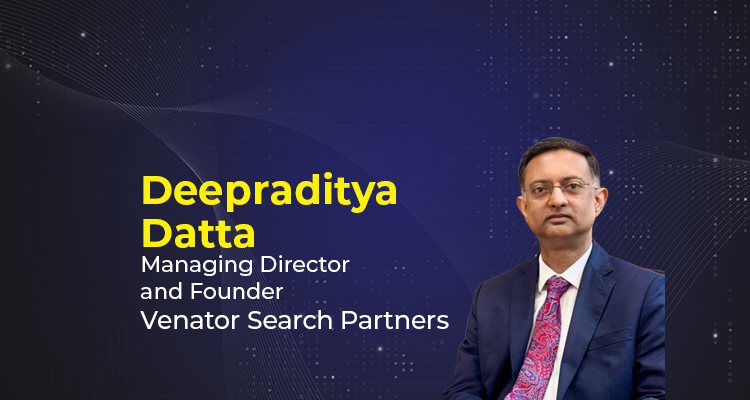
It takes a bank with a challenging spirit to give the search firm a mandate to think out of the box, and we are fortunate at Venator to have had a good set of clients who stretch the boundary. In many ways, the most innovative banks of the future may not be the ones that hire the best bankers alone, but the ones that bring together the broadest range of experiences, perspectives, and ideas.
Send news announcements/press releases to:
editor@thefoundermedia.com